
Quick Answer
What makes front hand mehndi designs different?
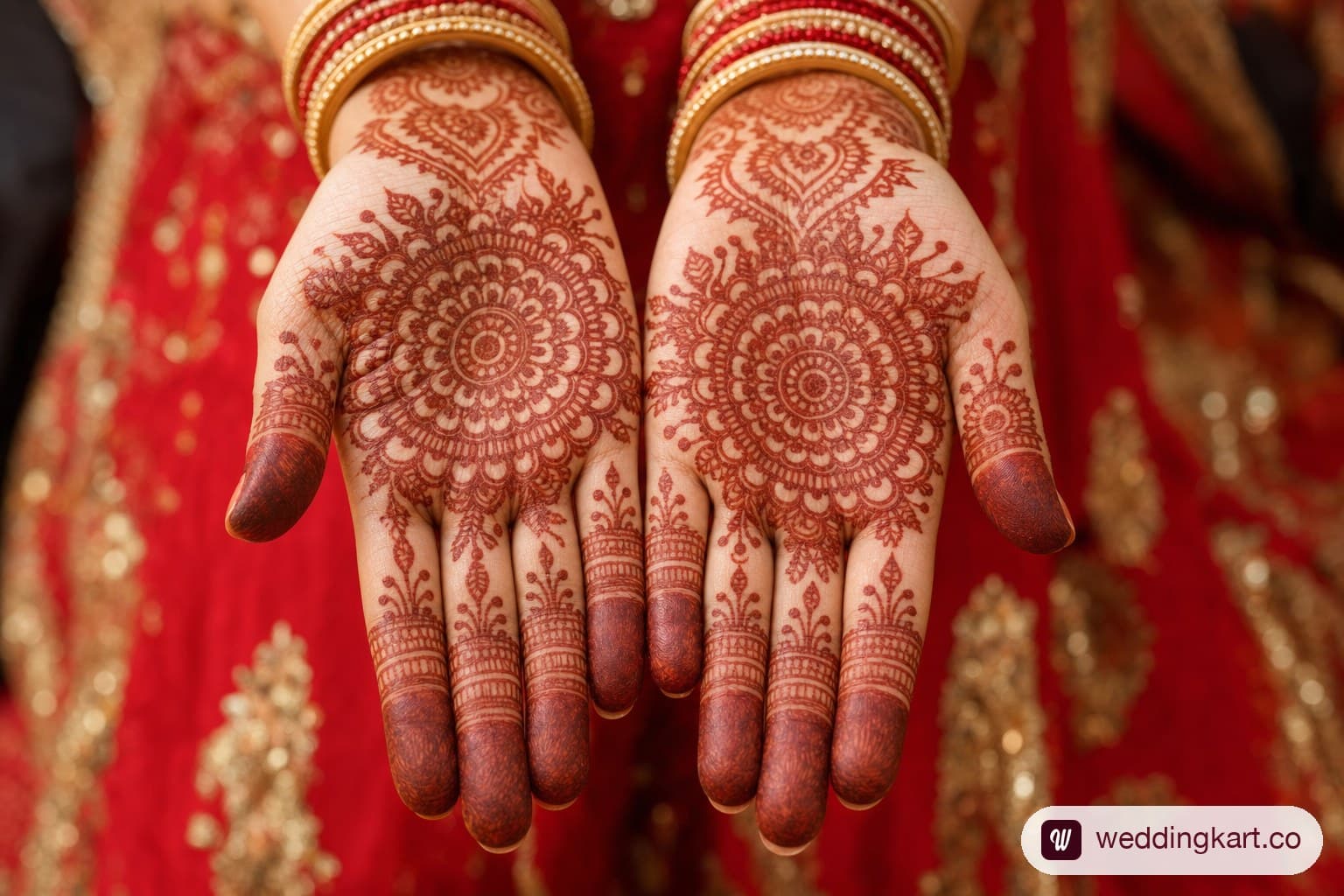
Front hand (palm-side) mehndi stains the darkest — palm skin is thicker and warmer, so it absorbs the most dye — which is why dense, detailed work belongs there. The 14 printable designs below span quick picks (15–30 min) to bridal-density jaal and royal styles (45–75 min), each sheet showing every line so your artist can copy it exactly.
Last updated:
Last updated:
Front Hand Mehndi Designs: 14 Printable Sheets
Here is the number that should drive your choice: the same henna stains two to three shades darker on the palm than on the back of the hand. The palm is where detail pays off and where the stain survives the most washing — so this collection carries the dense styles: grand mandalas, full jaal lattices, Arabic rose diagonals, royal palm-to-wrist work. Every design lists its apply time, because a 75-minute jaal is a commitment you should make on purpose.
Download all 14 sheets (free PDF)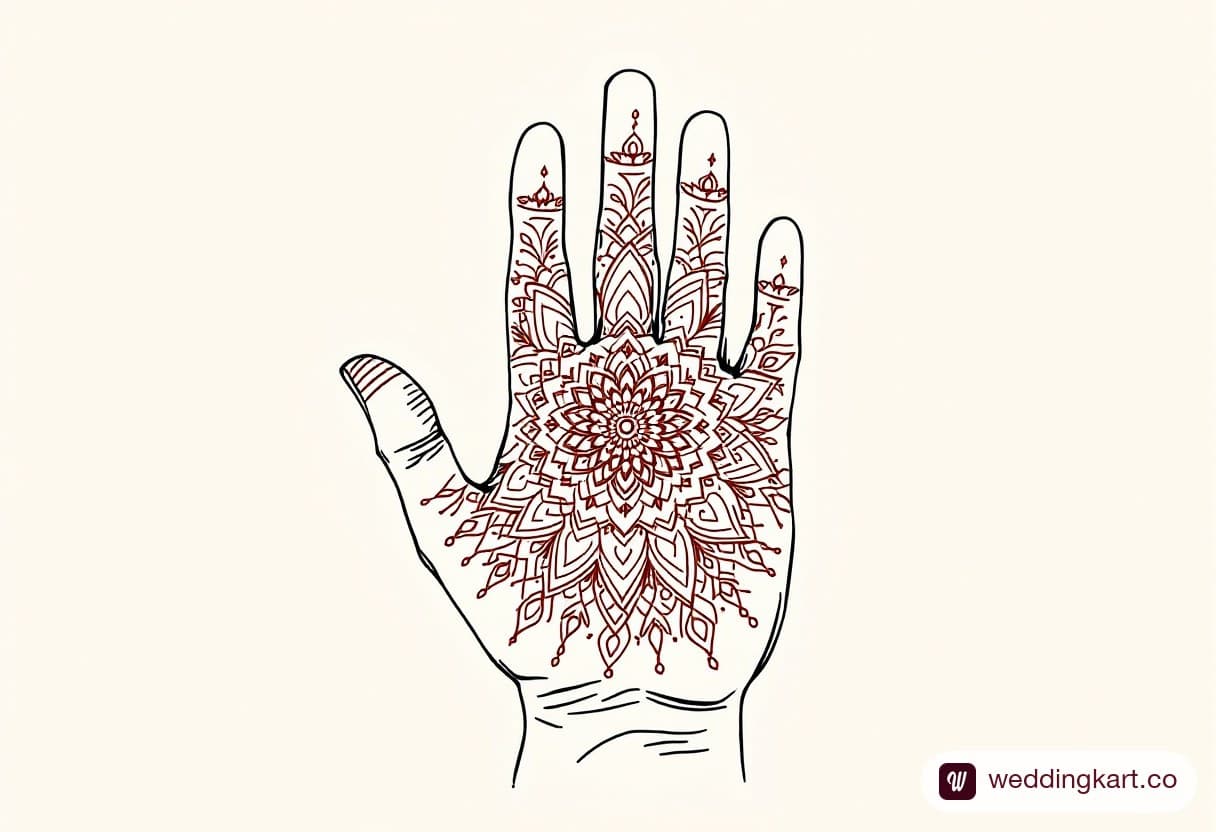
Grand palm mandala
35–45 minA grand mandala filling the palm centre with striped fingertip caps. The palm holds heat, so this is where henna stains darkest — put your most detailed work here and it will still be legible two weeks later.
Best for: Karwa Chauth, bridesmaids
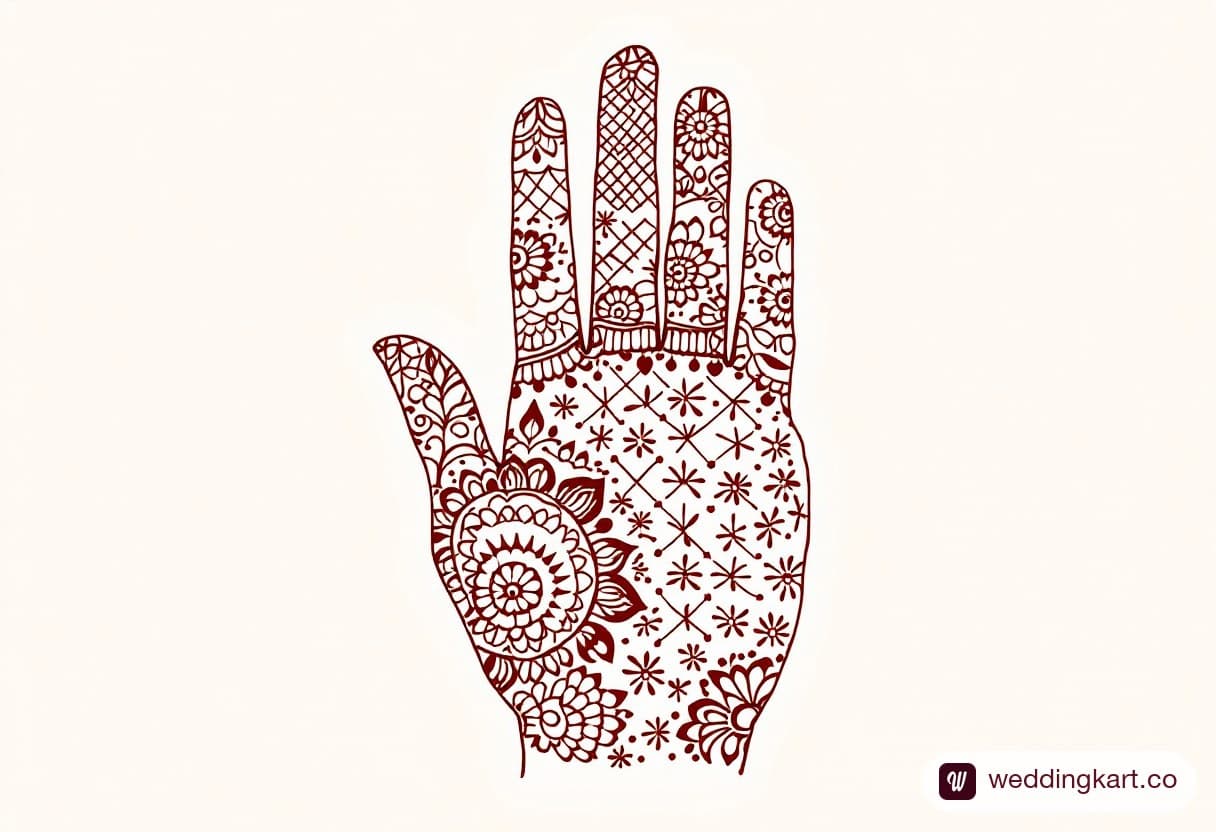
Full jaal lattice
60–75 minA fine net across the entire palm, a tiny flower at every intersection. This is bridal density without bridal storytelling — pick it when you want full coverage but not the bride-and-groom figurine theatre.
Best for: Close family of the bride
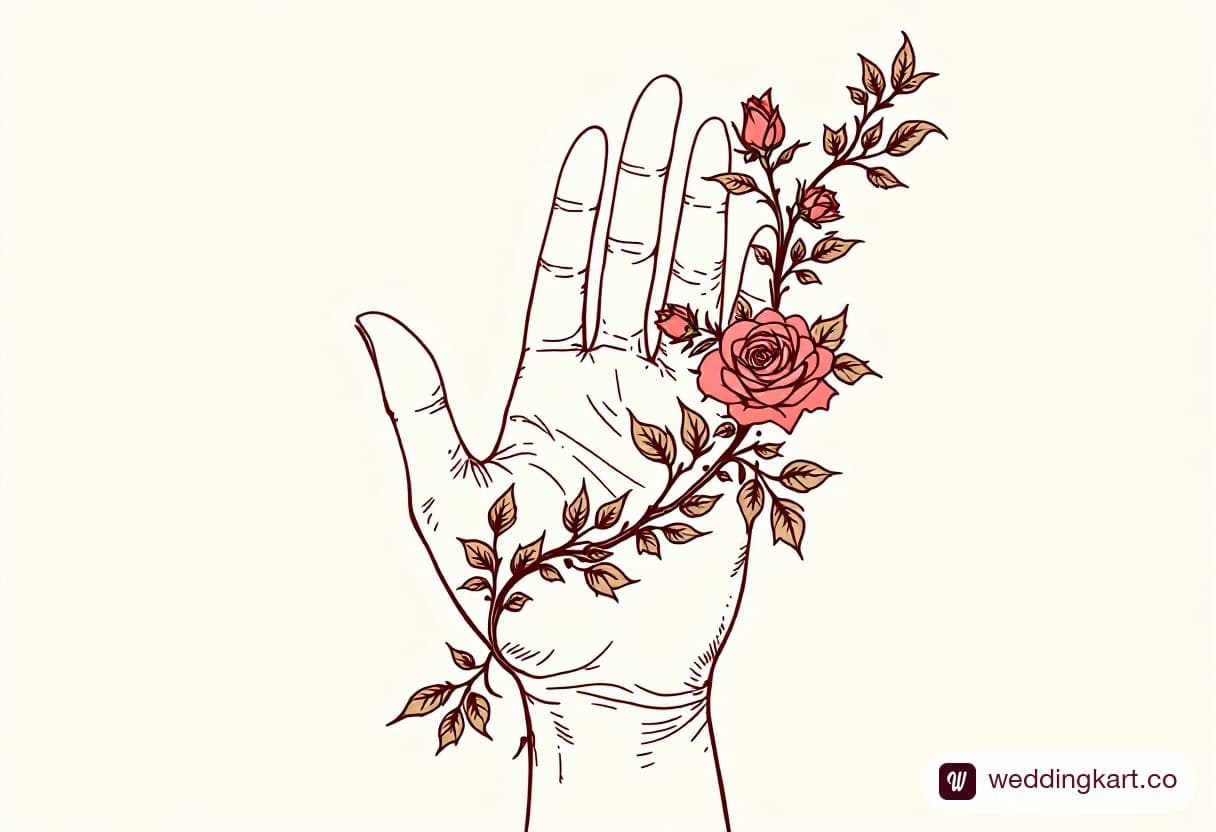
Arabic rose diagonal
25–35 minBold roses on a diagonal from little finger to wrist, generous open skin around them. The single most versatile front-hand design — it has carried guests through every function from roka to reception for a decade and still does.
Best for: Everything — the safe pick
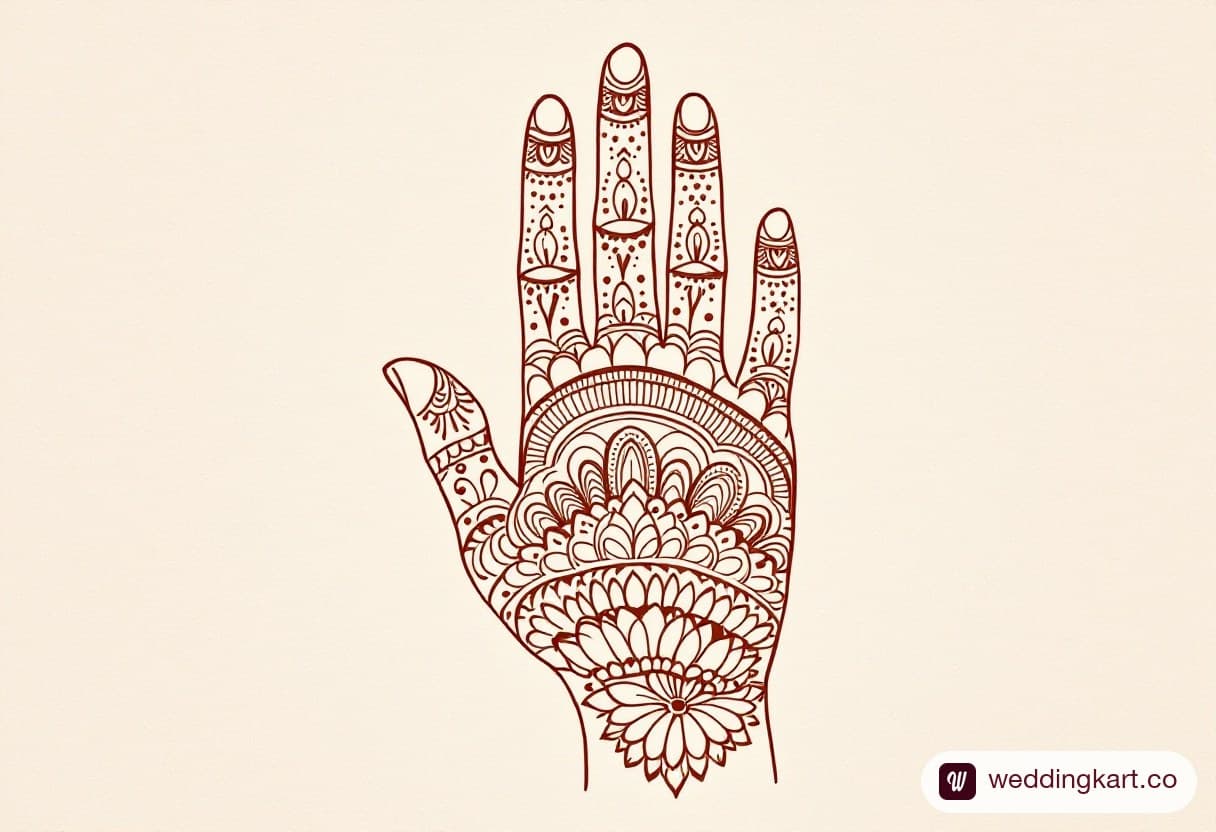
Royal palm-to-wrist
45–60 minLayered arches, paisleys and lotuses running middle finger to below the wrist. "Royal" in mehndi means architectural — domes and jharokha arches rather than scattered flowers — and this sheet is the cleanest example of the style.
Best for: Reception, bride’s sisters
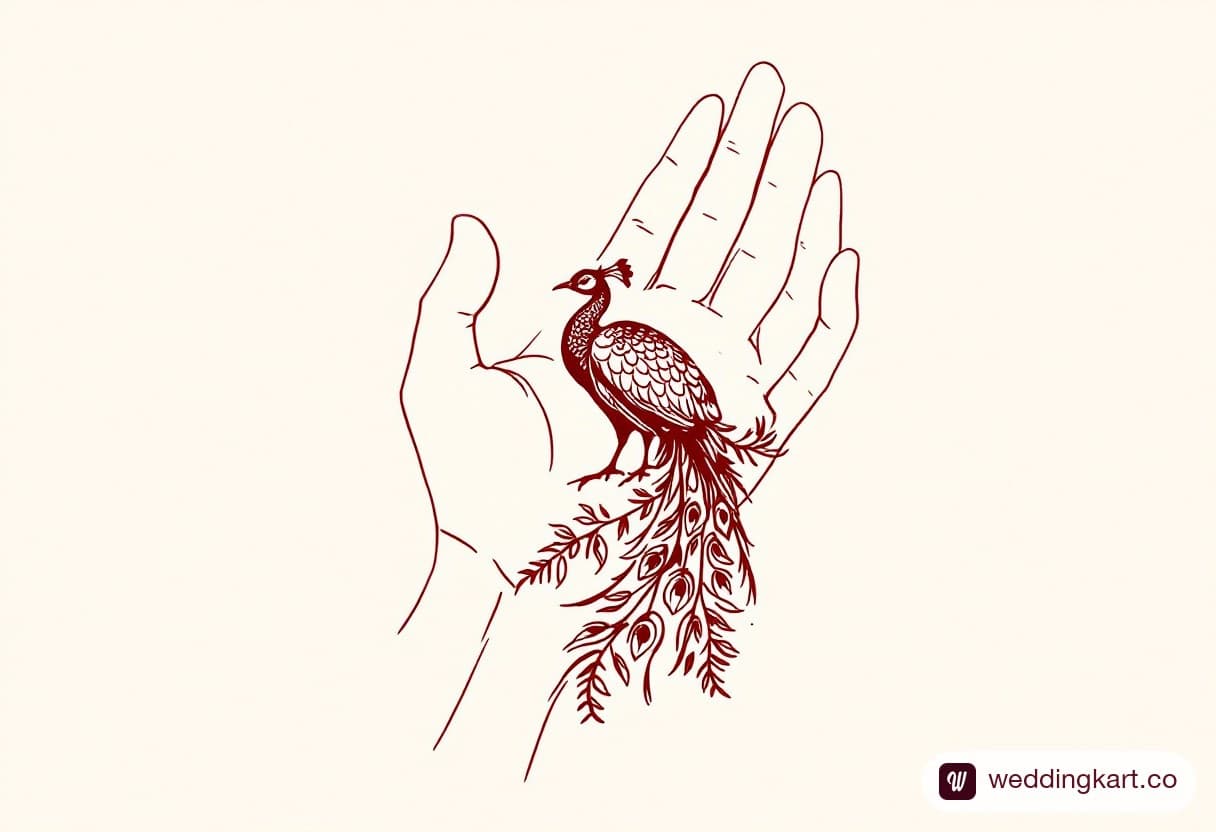
Peacock palm
35–45 minA peacock at the palm centre, tail curling toward the thumb. Ask the artist to keep the head simple — over-detailed peacock faces are the most common way this classic goes wrong at crowded counters.
Best for: Sangeet, mehndi night
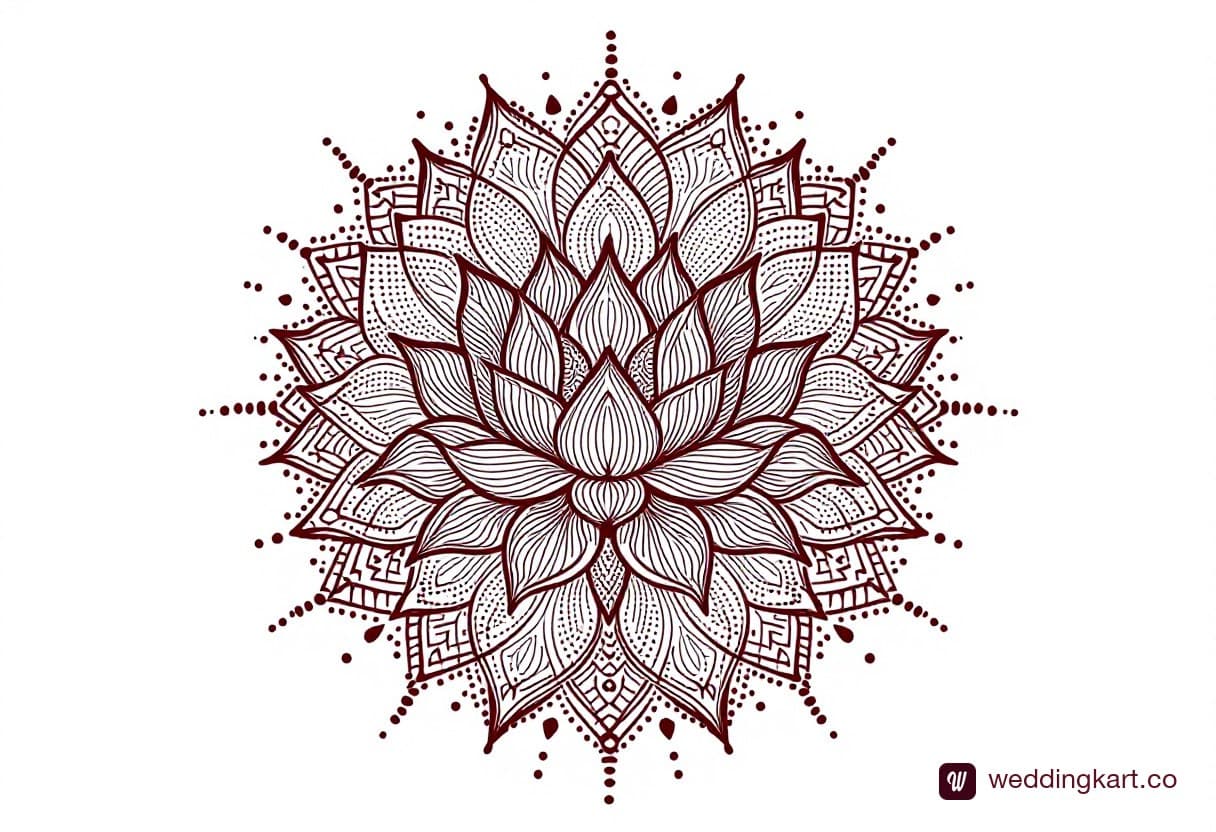
Lotus centrepiece
20–30 minOne oversized lotus drawn as a standalone centrepiece — have it placed at the palm centre. The lotus displaced the peacock as the trend motif around 2024 and has not let go; this treatment keeps it modern: one big statement, no filler.
Best for: Haldi, modern guests
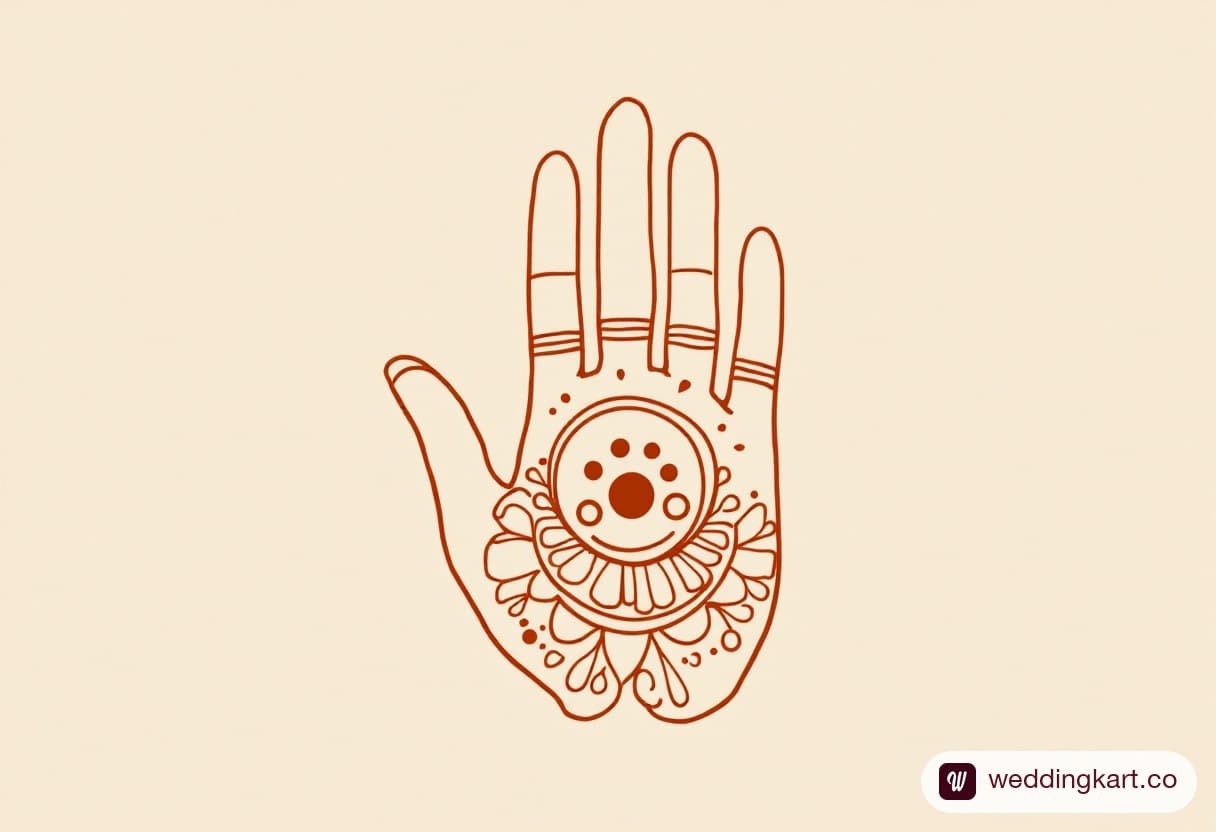
Deconstructed tikki
20–25 minThe traditional round tikki exploded into concentric broken circles, fingers left bare. The most fashion-forward sheet in this collection — it belongs with a pastel or ivory outfit, not a red lehenga.
Best for: Cocktail, pastel outfits
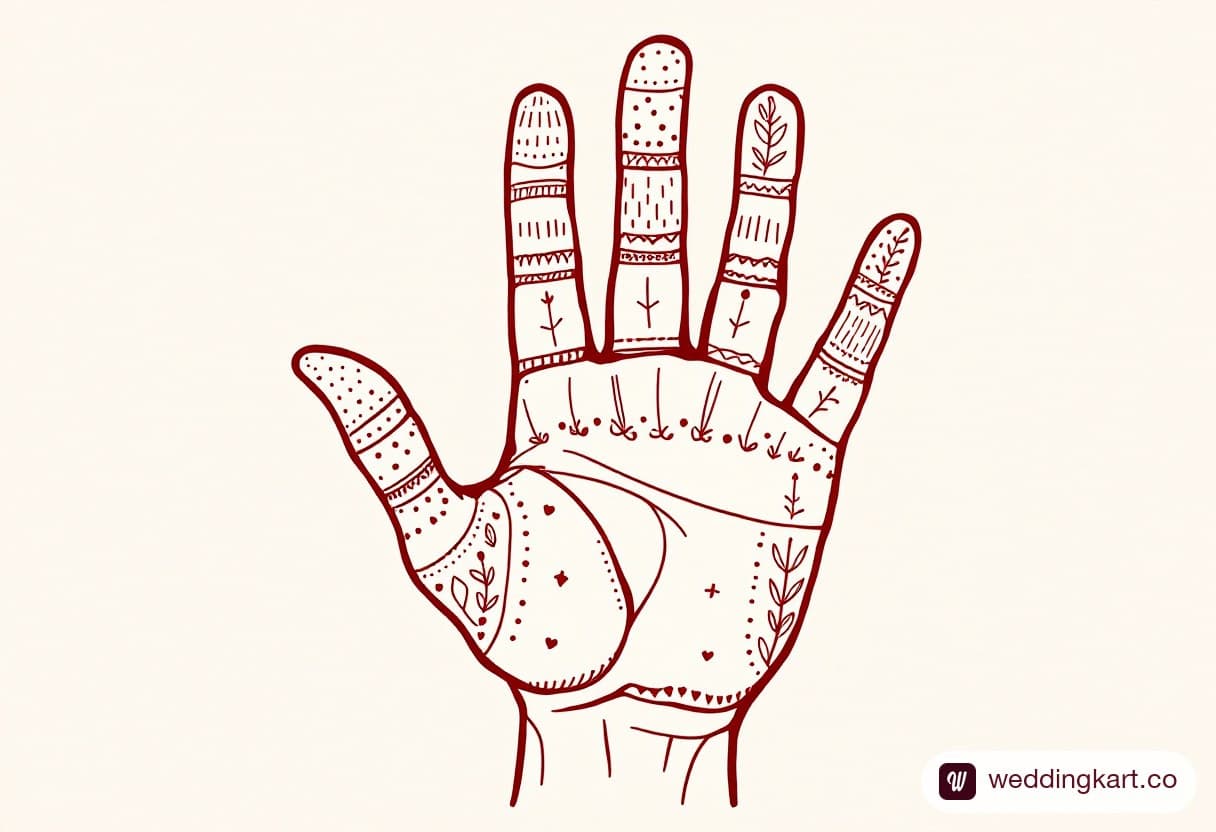
Finger columns
20–25 minEach finger carries its own slim column — dots, chevrons, leaves — with the palm empty. Five small designs instead of one big one, which means five chances for your artist to vary the look across both hands.
Best for: Office-friendly full look
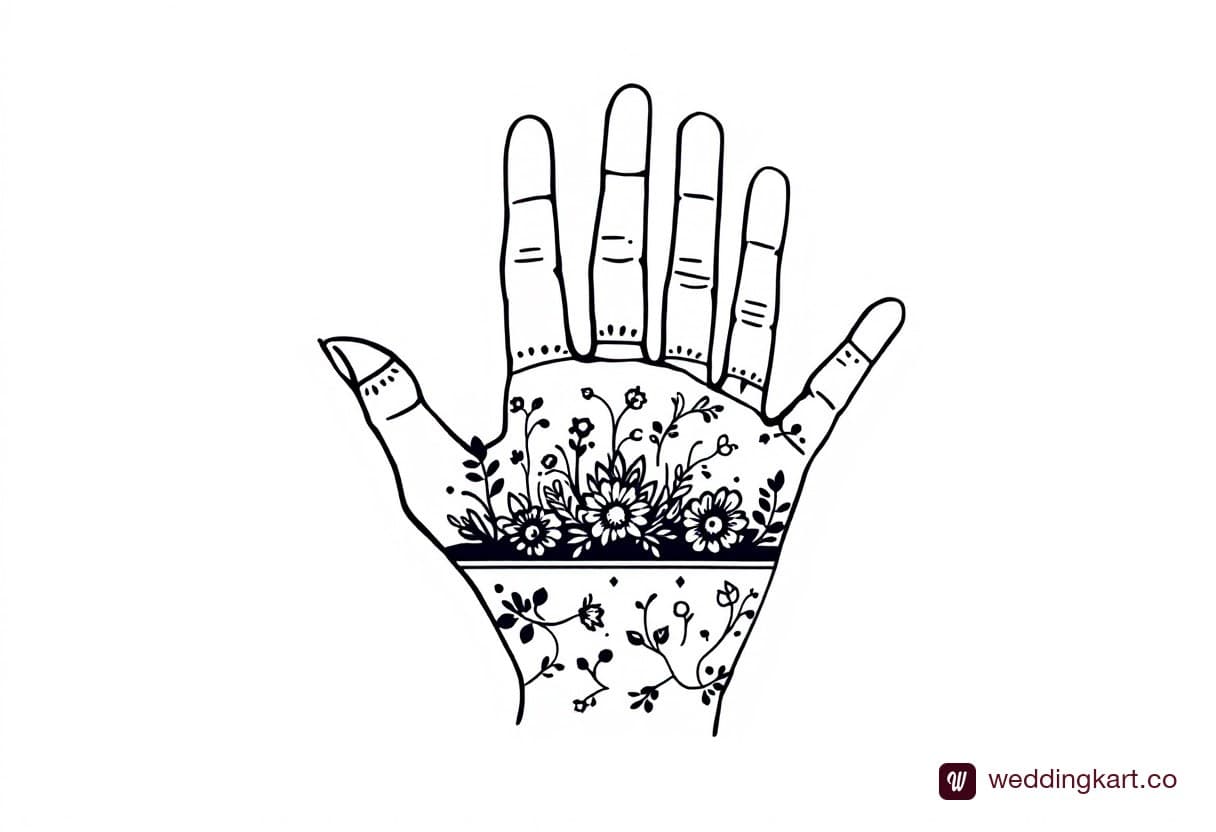
Half-crescent band
15–20 minA floral band sweeping across the lower palm, fingers nearly bare. This is the design for anyone who talks with their hands — the pattern frames every gesture instead of disappearing into a fist.
Best for: Hosts, speeches, sangeet
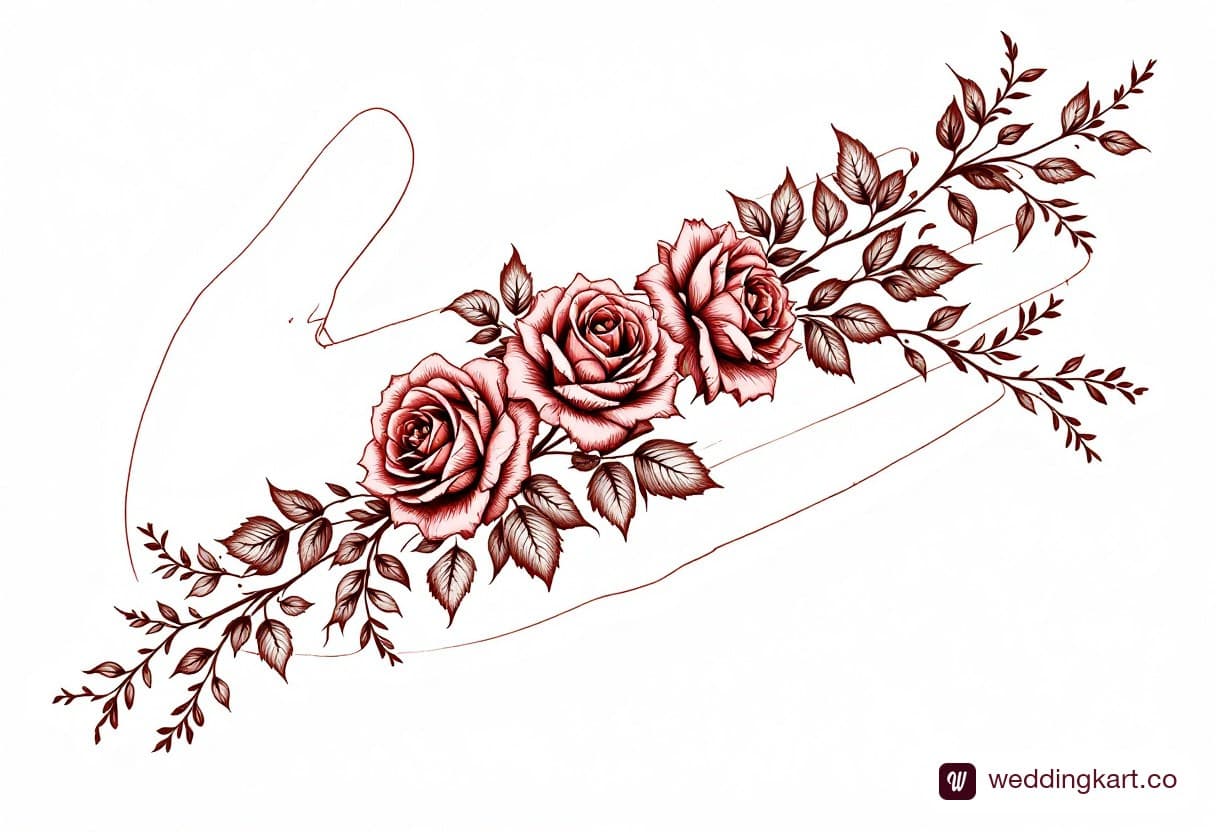
Bold rose line
30–40 minThree shaded roses on a diagonal with thick leafy vines. Shading is the skill test here — done right, the petals look three-dimensional; done wrong, they look smudged. Ask to see the artist’s shading work before committing.
Best for: Sangeet, receptions
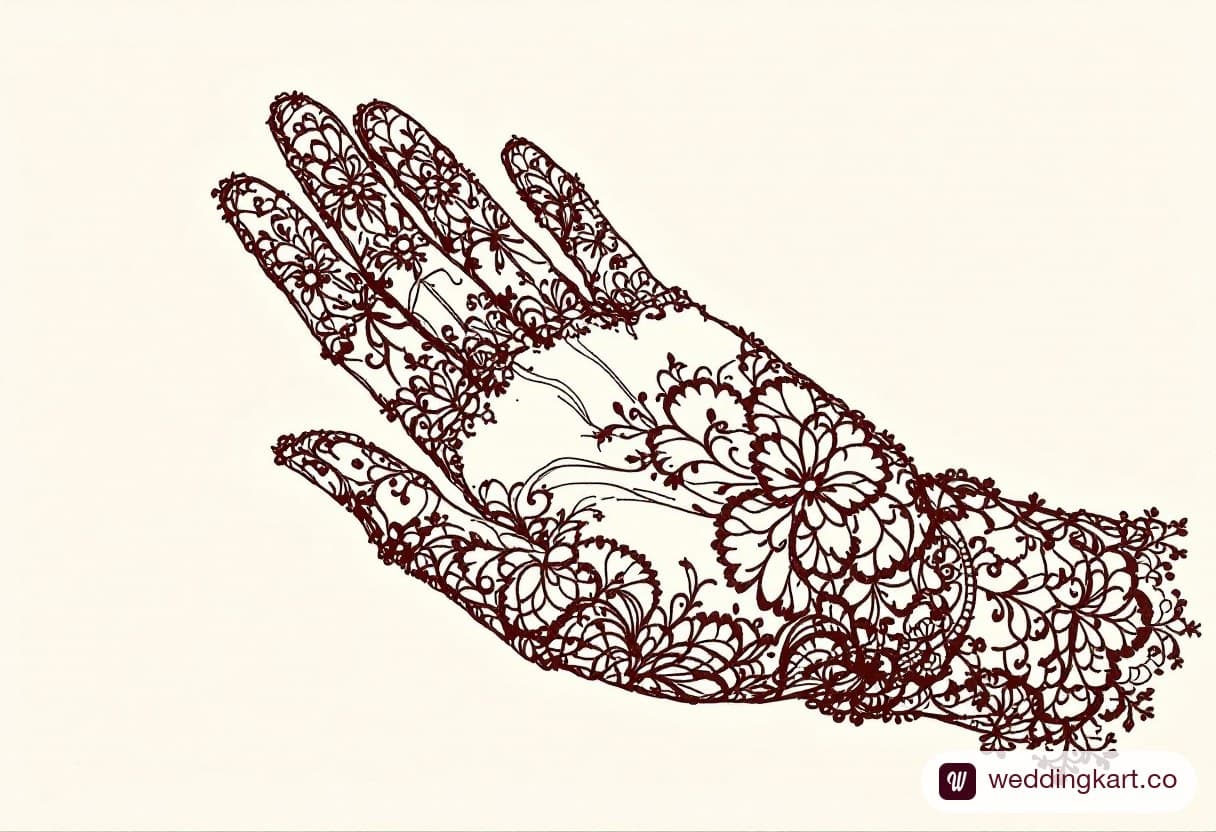
Lace glove filigree
40–50 minFiligree covering fingers and upper palm like a lace glove, lower palm open. Popular with brides who wear engagement rings they want visible — the design stops exactly where the ring sits.
Best for: Engagement, ring ceremony
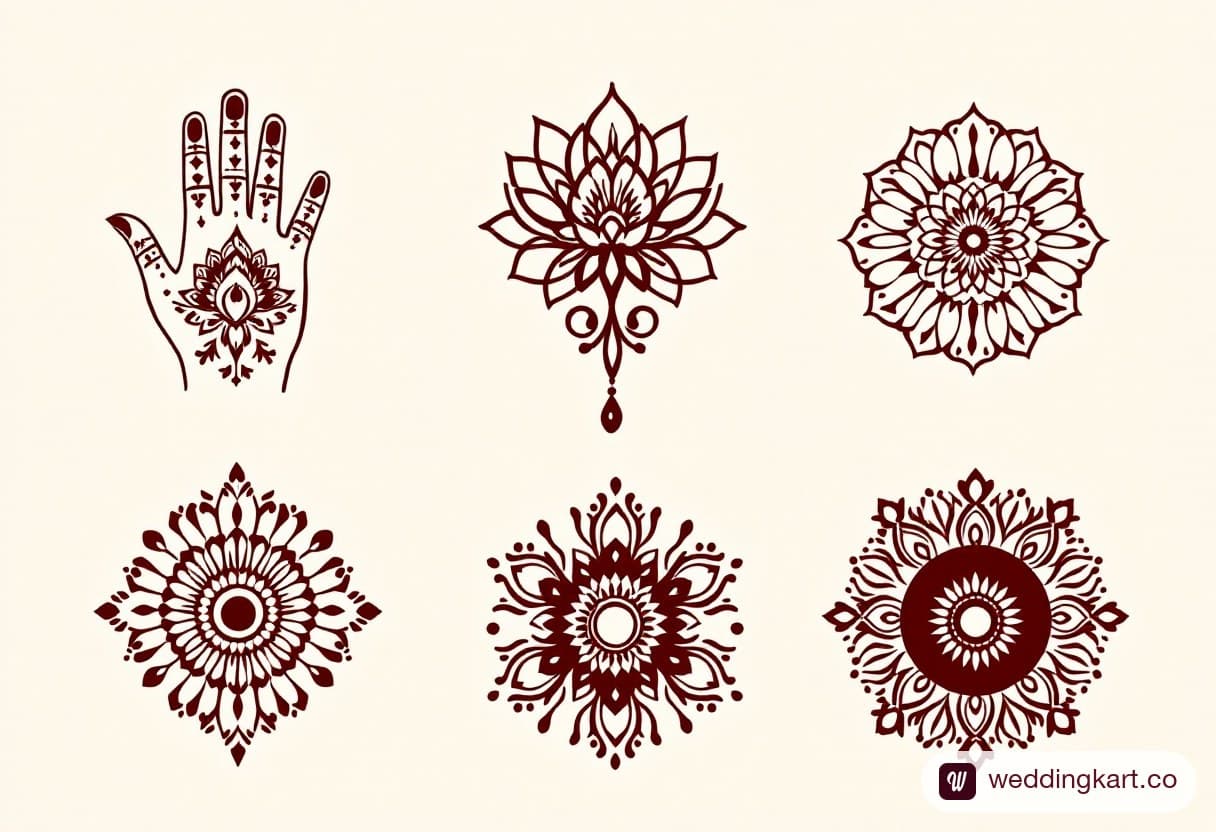
Front-hand element sheet
variesSix palm-side building blocks on one printable sheet — lotus, mandala variations and pendant drops. Mix any three and you have a coherent custom design; it is how professional artists actually compose on the spot, motif by motif.
Best for: Briefing your artist
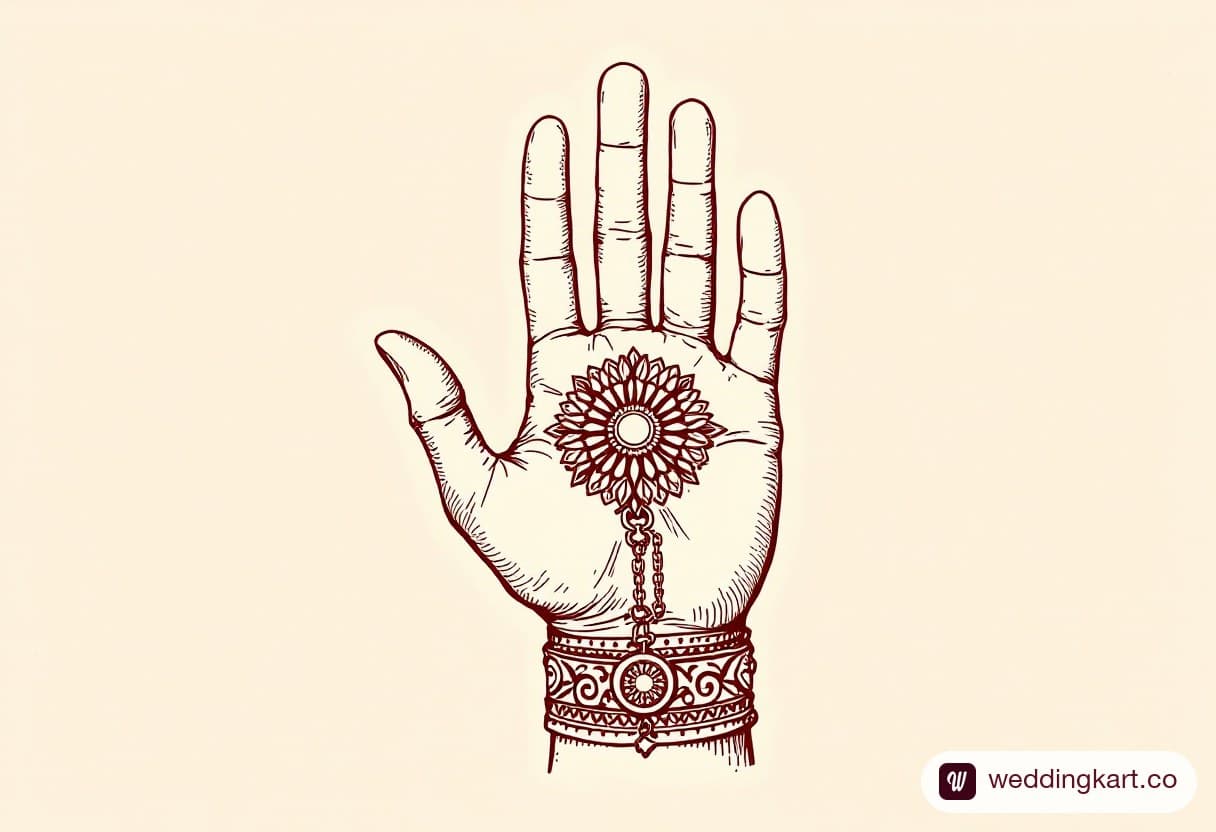
Wrist medallion
20–25 minAn ornate medallion at the wrist, one chain rising to the ring finger. The medallion sits where a watch would — which is exactly the point: it decorates the one strip of arm every sleeve length leaves visible.
Best for: Guests, winter functions
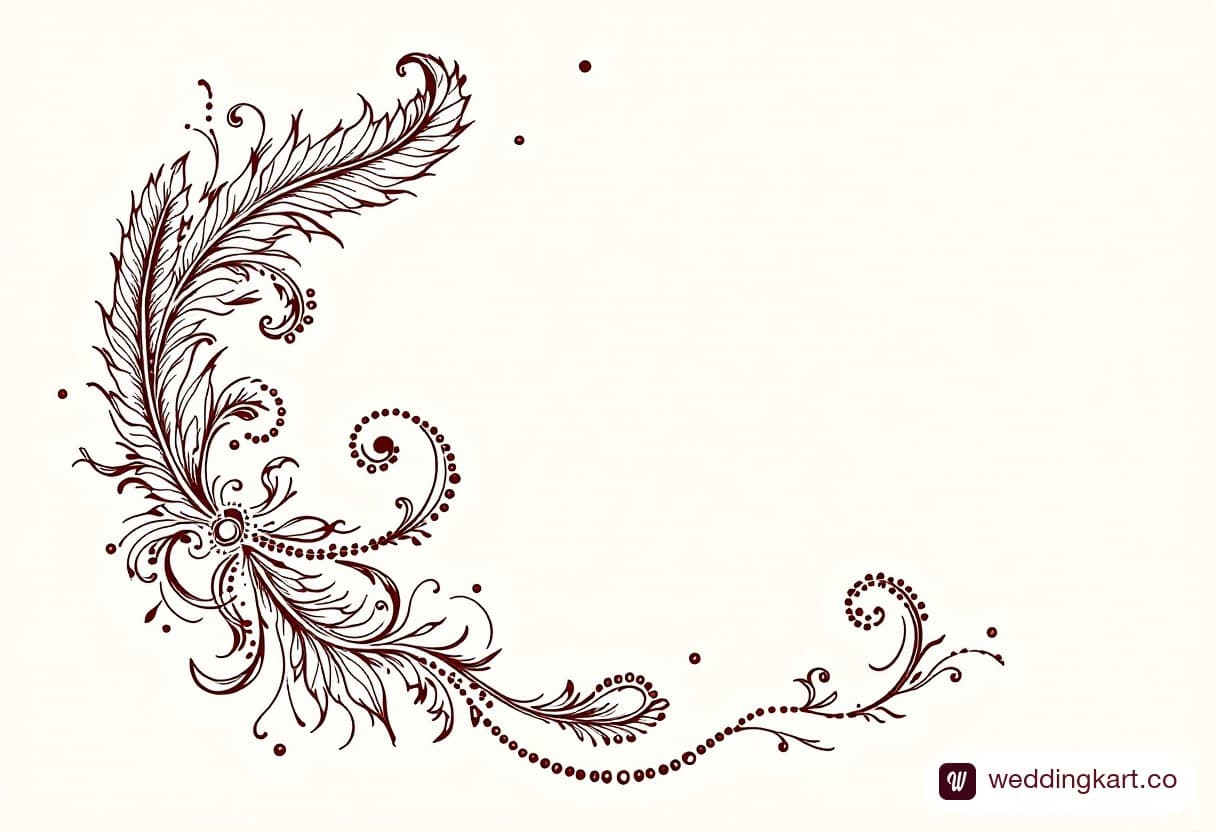
Feathered paisley pair
30–40 minA sweeping feathered paisley crescent with pearl-dot borders, drawn to curve around the palm edge. Feathering — tiny strokes off the main outline — is what separates a ₹500 hand from a ₹1,500 hand at most counters. This sheet shows why.
Best for: Mehndi night, Teej
Choosing by coverage
Think of front-hand designs in three tiers. Statement pieces — the lotus centrepiece, deconstructed tikki, half-crescent — give a finished look in under 30 minutes and suit guests. Mid-density — the Arabic rose diagonal, peacock palm, finger columns — is the wedding-function sweet spot at 25–45 minutes. Full coverage — jaal, royal, lace glove — is for the bridal circle, and honestly should not be attempted at a shared counter; book a dedicated artist slot or the last third gets rushed.
The Arabic rose diagonal deserves its reputation as the safe pick. We have watched it work at every function type from roka to reception for a decade — it flatters every hand shape, tolerates a mediocre artist, and its open skin keeps it elegant even when the stain comes out patchy. When in doubt, that sheet.
Frequently Asked Questions
Planning the mehndi ceremony itself?
Designs are the easy half. The hard half is getting 80 guests to actually turn up at 4 pm with their hands free — Weddingkart sends the mehndi invite on WhatsApp, collects yes/no replies with one tap, and shows you the live headcount so you know how many mehndi artists to book.