
Last updated:
All PostsAll-Inclusive Wedding Venues in New York: The 2026 Guide
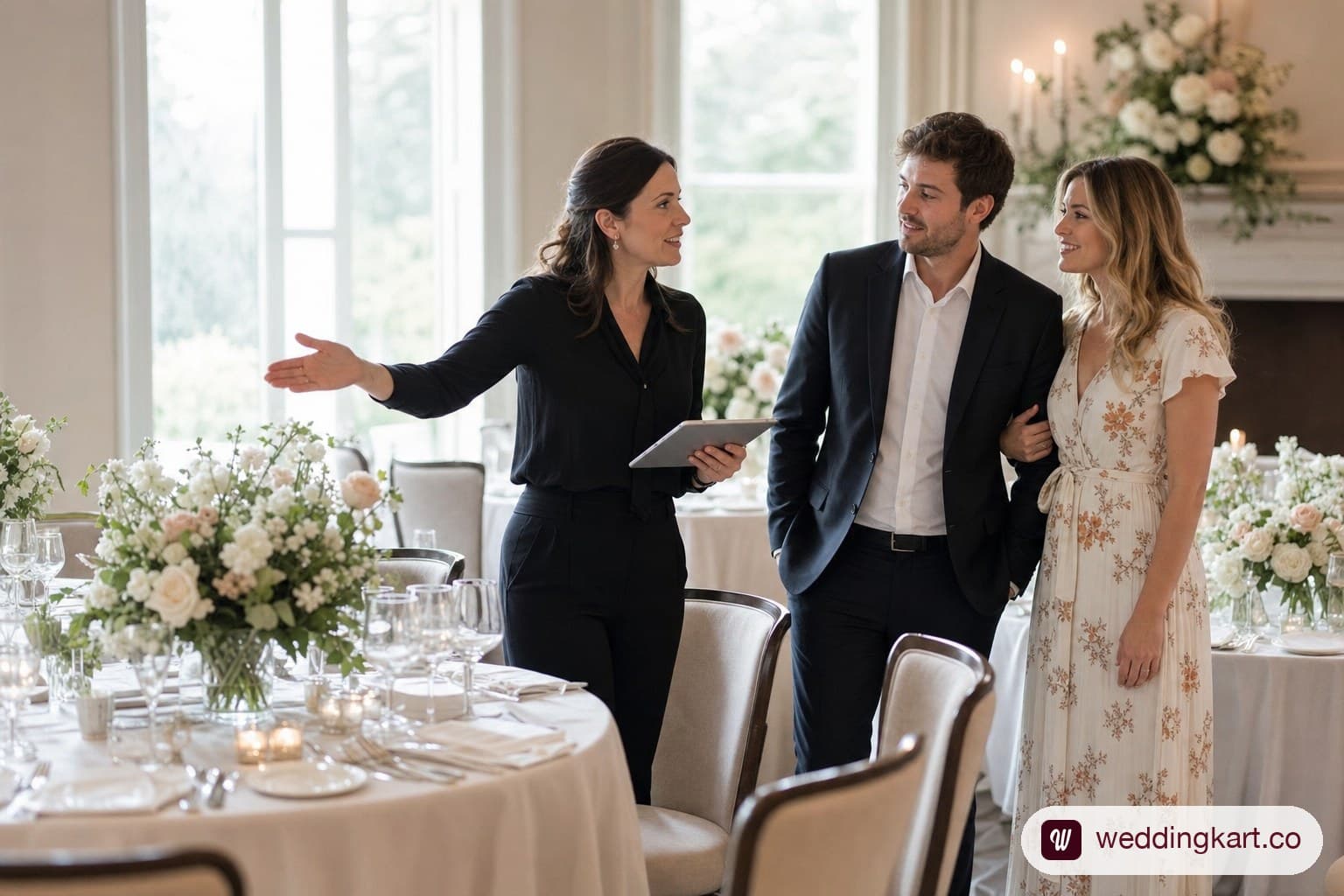
"All-inclusive" isn't a regulated term, a certification, or a standard package — it's marketing copy, and two venues both using it can bundle wildly different things for wildly different prices. One all-inclusive venue's package covers catering, rentals, a coordinator, and six hours of exclusive use for a transparent per-person rate starting around $7,500. Another's "all-inclusive" package covers the room and basic tables and chairs, with catering, alcohol, florals, and overtime all billed as separate line items that show up after you've already signed. Both call themselves all-inclusive. Only one of them actually is.
This guide covers what genuinely all-inclusive venues in and around New York actually bundle, what real packages cost, and the specific questions that separate a transparent price from a quote that grows once you're locked in. For the full landscape of NYC venue types, our complete NYC wedding venue guide covers how all-inclusive fits alongside hotels, lofts, and outdoor spaces.
What "all-inclusive" should actually mean
At a minimum, a genuinely all-inclusive wedding venue bundles the venue rental, in-house catering, beverage service, tables and chairs, basic linens, service staff, and some level of day-of event coordination into a single quoted price — usually per guest rather than a flat fee. The strongest packages go further, adding private suites for the couple, ceremony space and setup, lighting, and centerpiece or candle decor as standard inclusions rather than upsells.
The average wedding venue cost across New York State sits around $6,709 for the space alone — a number that reflects venue rental in isolation, not a bundled package. All-inclusive venues start meaningfully above that per-guest, because the number already has catering, service, and coordination baked in rather than billed on top.
Real all-inclusive venues and what they include
Deity Events, a Brooklyn venue, is one of the clearest examples of transparent all-inclusive pricing in the category: pricing is quoted per person, gratuity included, with no additional service fees layered on afterward. The package covers six hours of exclusive venue use, full catering, an event coordinator, and furniture, linen, and candle decor — the kind of itemized clarity that makes it easy to compare against a competing quote line by line.
The Mansion at West Sayville on Long Island hosts up to 220 guests, with its Complete Wedding Package starting at $11,995 and seasonal pricing flexibility depending on the date. It's a useful reference point for couples comparing a Long Island all-inclusive estate against a Brooklyn or Manhattan option — generally more square footage and guest capacity for a comparable starting price.
Capitale, at 130 Bowery in Manhattan, takes a more customizable approach: catering, full bar service, private suites, and experienced in-house coordination are all part of the offering, with one-event-at-a-time exclusivity so your wedding isn't sharing the building with another event the same night — worth confirming directly at any venue marketed as all-inclusive, since some "exclusive use" claims only cover your specific room, not the full property.
What's usually still billed separately, even at a genuine all-inclusive venue
Even the most transparent all-inclusive packages tend to carve out a consistent set of exceptions. Knowing them ahead of time turns a surprise into a line item you budgeted for.
Overtime. Almost every package, all-inclusive or not, has a contracted end time with an hourly overtime rate if the reception runs long — commonly several hundred dollars per additional hour. Ask for this number specifically; it's rarely printed on the headline package sheet.
Premium alcohol and specialty bars. Most all-inclusive packages include a standard beer-wine-liquor bar. A premium spirits upgrade, a specialty cocktail menu, or an extended open bar beyond the included hours is typically an add-on.
Cake-cutting and corkage fees. If you're bringing in a cake or wine from outside the venue's in-house offerings, ask directly whether a cutting or corkage fee applies — a small line item, but one that surprises couples who assumed "all-inclusive" meant no exceptions.
Florals beyond centerpieces. Included candle and centerpiece decor is common; a full floral installation, ceremony arch, or bridal party bouquets almost always sit outside the package and are booked with an outside florist.
Guest count above the package minimum. Most all-inclusive pricing is quoted per person up to a point, then the per-head rate can shift once you cross a specific guest-count threshold — confirm where that line is if your list is still in flux.
How to actually compare two all-inclusive quotes
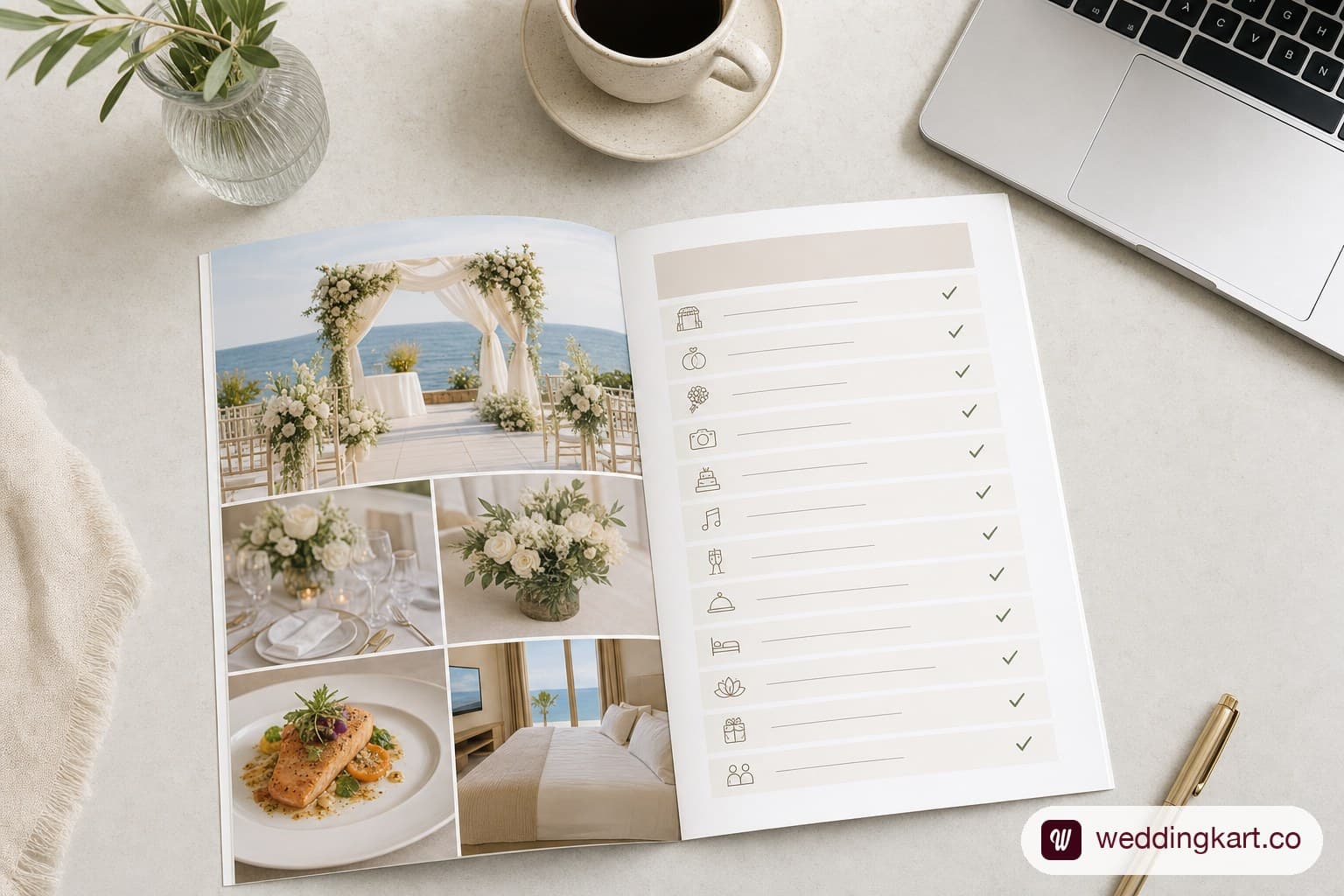
Because there's no standard definition, the only reliable way to compare two venues both claiming all-inclusive pricing is to request the fully itemized package sheet from both and check it against this list: catering (and whether tastings are included), bar package tier, rental furniture and linens, coordination (day-of only, or full planning), private suite access, ceremony space, setup and breakdown labor, and overtime rate. A venue that hesitates to provide this breakdown in writing is worth a second look regardless of how strong the tour felt.
It's also worth asking how many events the venue books per day. An all-inclusive venue running back-to-back weddings on the same date needs a hard changeover time, which can compress your own setup window or push your end time earlier than a single-event venue would. Our wedding budget calculator is a fast way to model a package quote — including the likely add-ons above — against your total budget before comparing two venues side by side.
When all-inclusive is the right call
All-inclusive venues make the most sense for couples who value predictability over customization — you're trading some control over individual vendor choices for a single point of contact, one contract, and a number that's far less likely to balloon between booking and wedding day. Couples who want to hand-pick every vendor, from florist to caterer to rental company, are usually better served by a venue-only rental like a loft or a barn, where our Hudson Valley and Long Island barn venue guide covers several properties that take the opposite approach — bring your own everything.
If budget flexibility matters more than turnkey convenience, our budget-friendly NYC venue guide covers where costs come down across venue categories, all-inclusive included.
Booking timeline and locking in the number
All-inclusive venues book on a similar timeline to other full-service NYC and Long Island venues — 12–18 months out for a peak-season Saturday, with more flexibility on Fridays, Sundays, and the off-peak November–April window. Because pricing is often quoted per person, ask specifically whether the rate is locked at signing or subject to change if your final guest count shifts closer to the wedding, and get that answer in writing before you sign.
Once the package is locked, the coordination the venue provides only covers the day itself — it doesn't track who's actually coming. WeddingKart lets you send invitations and RSVP requests by WhatsApp, SMS, and email and track confirmations in real time, so the guest count you give your all-inclusive venue for final per-person billing is accurate, not a guess padded for safety.
"All-inclusive" is worth exactly as much as the itemized list behind it. Ask for that list before the tour ends, and the comparison between venues gets a lot more honest.
By Mayank JaiswalLast updated
Was this article helpful?
Share