
Last updated:
All PostsRooftop & Waterfront Wedding Venues in NYC: The 2026 Guide
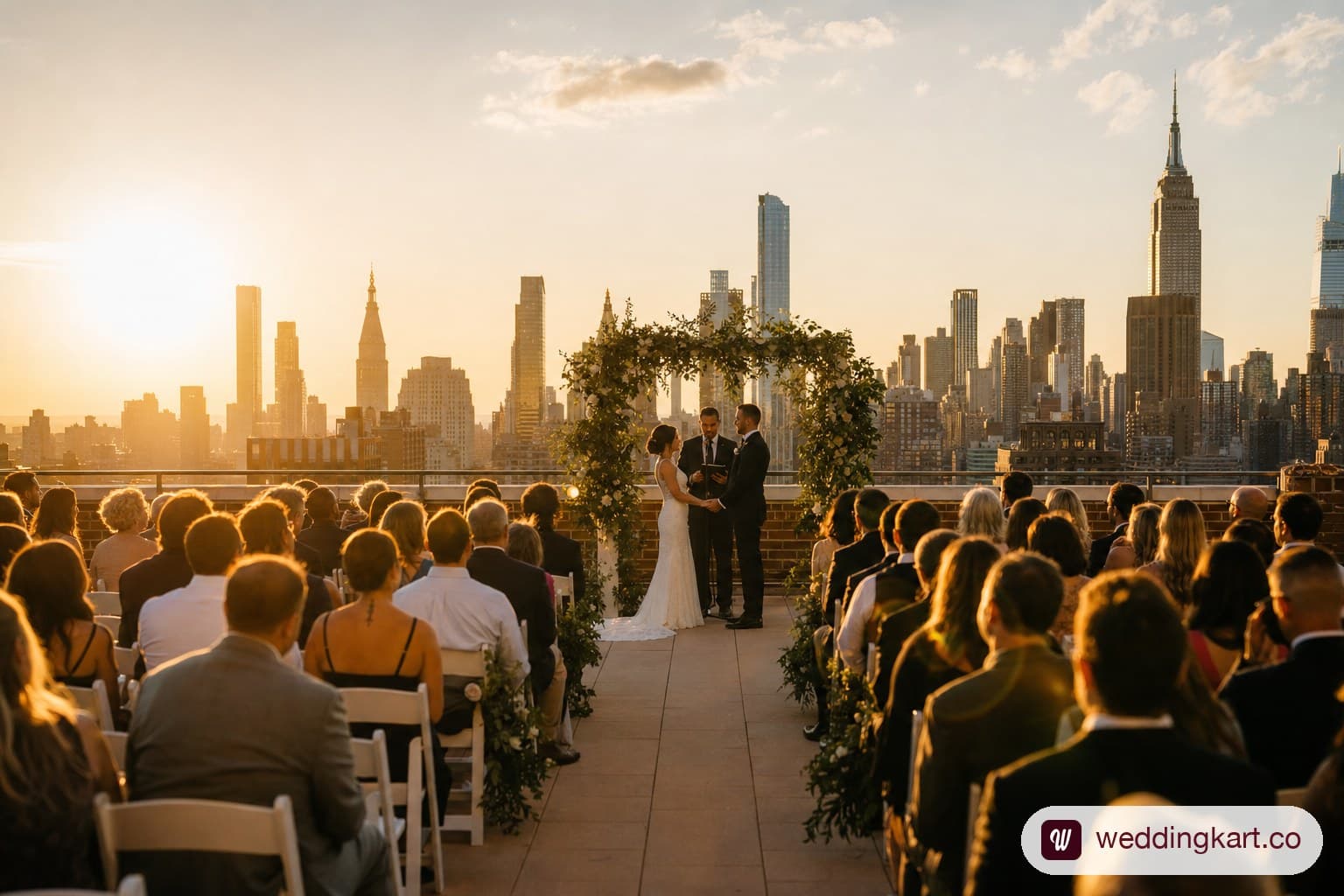
Tribeca Rooftop's 2026 Saturday minimum is 200 guests at $410 per person — and that's before a prime May, June, September, or October date pushes it to $440 per person. That number isn't there to scare you off; it's there because most couples who fall for a rooftop venue online never see the per-person minimum until the third email in the booking process. Rooftop and waterfront venues sell the photo first and the operational reality second, and the reality — weather contingency, noise curfews, weight limits, guest-count minimums — is what actually determines whether the venue works for your wedding, not just your Pinterest board.
This guide covers both categories together because they share the same underlying constraints: exposure to weather, structural limits most couples never think to ask about, and pricing that runs meaningfully above a comparable indoor ballroom. If you haven't settled on venue type yet, our broader guide to NYC wedding venues compares rooftops and waterfront spaces against hotels, lofts, and gardens.
Rooftop venues: what you're actually paying for
A rooftop venue in NYC is really three things bundled into one booking: the view, the weather risk, and the noise curfew. Couples usually only budget for the first one.
Tribeca Rooftop sits atop a converted 1920s printing-press building and is one of the most-booked rooftop venues in the city. Friday 2026 dates require a 195-guest minimum at $320 per person; Saturdays require 200 guests at $410 per person, climbing to $440 per person for prime Saturdays in May, June, September, and October. Sunday is the relative value play — a 175-guest minimum at $300 per person.
Tribeca 360°, a separate space in the same building family, scales differently: Friday evenings run a 160-guest minimum at $210 per person, Saturday evenings step up to a 200-guest minimum at $290 per person, and the room can technically hold up to 700 guests for couples with a large list.
Bryant Park Grill offers both a rooftop and an indoor dining room overlooking the park itself, with capacity ranging from 80 to 250 guests and all-in pricing more commonly landing between $40,000 and $90,000 — a meaningfully wider range than the fixed per-person minimums above, because pricing depends heavily on which room and season you book.
Wythe Hotel in Williamsburg takes a different approach entirely: a boutique hotel with rooftop terraces and an in-house aesthetic, running around $76,250 for a full wedding buyout — useful context for a Brooklyn rooftop option that isn't a converted event hall.
Zoom out and the general Manhattan pattern holds: a full rooftop wedding — venue, catering, bar, rentals — typically lands between $70,000 and $130,000 all-in, with the bare venue rental itself running $30,000–$60,000 before catering is added. Brooklyn rooftop venues generally sit below that range, though the gap has narrowed for the most in-demand spaces.
The curfew nobody mentions on the tour
Almost every rooftop venue in NYC operates under a building-specific noise curfew, typically ending amplified music at 10 or 11 p.m. regardless of what your contract says your reception's official end time is. This isn't a soft guideline — it's usually tied to the residential zoning of the building or block, and venue staff will cut the DJ at the exact minute if there's been a prior noise complaint. Ask for the curfew in writing during your tour, not after you've signed.
Weight limits and structural realities
Rooftops have load limits — for guests, for a dance floor, for a tented structure if you're adding one. Most established venues have already solved this, but it's worth asking directly whether the roof is rated for your full guest count plus catering equipment plus a band or DJ setup, especially at smaller or newer rooftop spaces that haven't hosted 200-person events before.
Waterfront venues: East River vs. Hudson River
Waterfront venues split cleanly into two groups by which river they face, and the difference isn't just cosmetic — it changes your photos, your light, and your guest logistics.
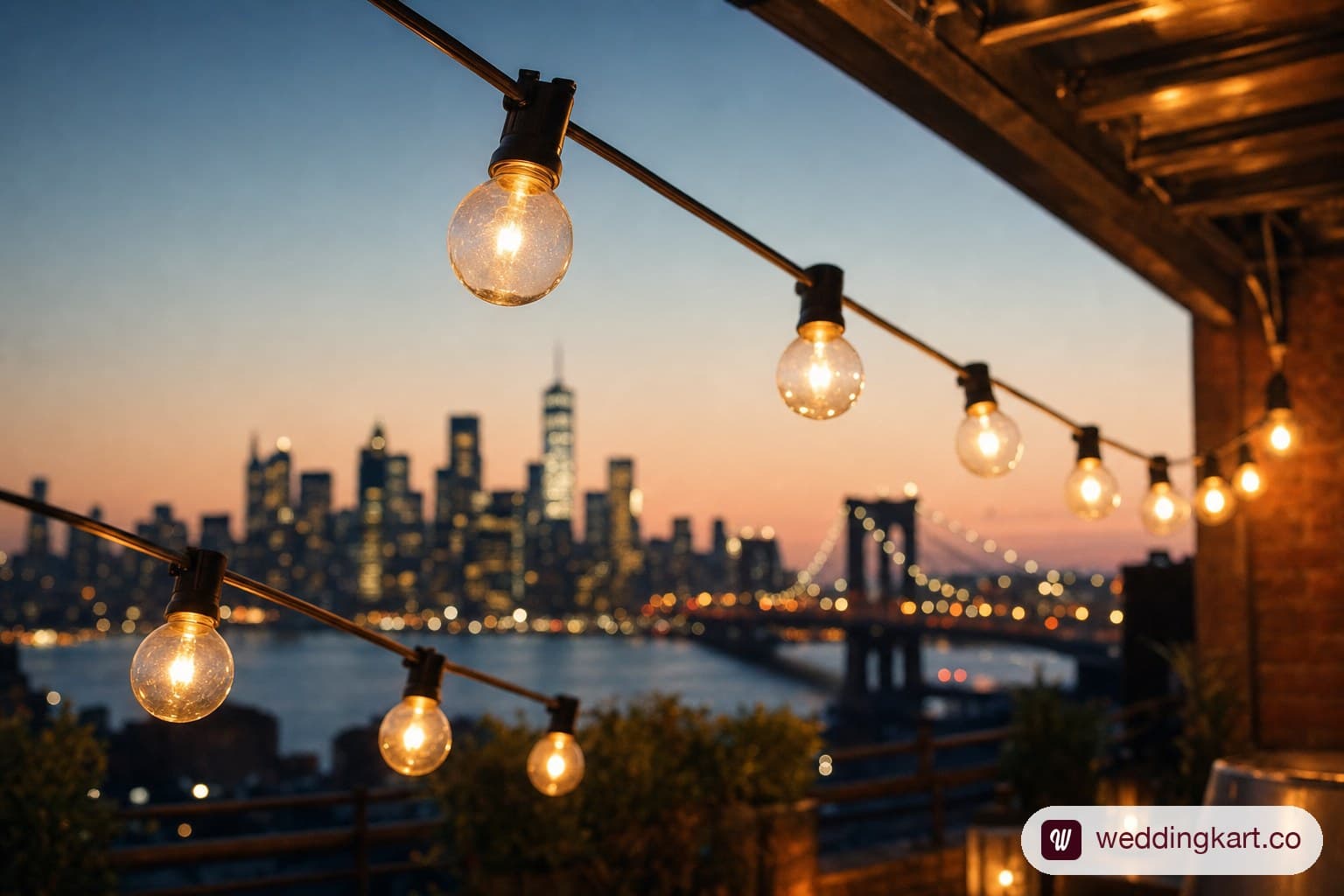
East River venues, concentrated in Brooklyn and Long Island City, face the Manhattan skyline directly. The River Café, tucked beneath the Brooklyn Bridge at 26 Bridge St, is the archetype: sweeping Manhattan skyline views with a capacity around 100 guests, making it better suited to an intimate wedding than a large one. The William Vale in Williamsburg takes a larger-scale approach — a 22-level hotel with multiple indoor and outdoor waterfront spaces along the East River.
Hudson River venues face New Jersey and tend to catch better sunset light, since the sun sets over the water rather than behind it. Pier Sixty is the scale option here: a 20,000-square-foot waterfront event space on Manhattan's west side with capacity up to 1,650 guests, making it one of the only true large-format waterfront venues in the city. The View at the Battery, at the southern tip of Manhattan, trades scale for a different view entirely — New York Harbor and the Statue of Liberty rather than the Midtown skyline.
Both river-facing categories carry the same permitting layer most couples don't anticipate: outdoor waterfront use in Manhattan and Brooklyn Heights frequently requires a Department of Parks permit, on top of the venue's own liquor license and a sound permit if you're running amplified music near a residential waterfront block. A venue that's hosted weddings regularly will handle this as part of their coordination; a newer or less-established space may leave it to you, so ask directly who pulls the permit and by when.
Weather contingency — the question that matters more than the view
Every rooftop and waterfront venue will tell you they have a rain plan. The question worth pushing on is what that plan actually is. A tent is not the same as an enclosed indoor backup room, and some contracts only guarantee the tent — which still leaves you exposed to wind and temperature on a cold or blustery day. Before booking, ask three specific questions: what is the fully enclosed indoor alternative (not just covered), is it guaranteed or "subject to availability," and how late in the day does the venue make the call to move indoors.
May through October is peak season for both categories for a reason — it's the stretch where an open-air or partially open venue is usable without a coat. Outside that window, a rooftop or waterfront booking becomes a bet on a mild day, and venues that are honest about that will steer shoulder-season couples toward the indoor backup as the default plan, not the exception.
What actually drives the price
Three factors move the number more than venue reputation does. Guest-count minimums are the biggest lever — Tribeca Rooftop's jump from a 175-guest Sunday minimum to a 200-guest Saturday minimum, at a higher per-person rate, can add well over $30,000 to the same wedding just by changing the day of the week. Season is the second — the same venue on a peak Saturday in June can run 20–40% higher than an off-peak Friday or Sunday in February. Weather infrastructure is the third and most overlooked — a generator, additional tenting, or heaters for a shoulder-season outdoor ceremony are line items that don't appear on the initial venue quote at all.
If your guest list is under 100, a rooftop or waterfront venue with a 175–200 guest minimum simply isn't the right fit financially — you'd be paying for headcount you don't have. Our small and intimate NYC venue guide covers rooftop and waterfront-adjacent options built for smaller guest counts, including a few restaurant rooftops that don't carry the 150+ minimums the dedicated event venues do.
Booking timeline
Rooftop and waterfront venues book out further than most other NYC categories because supply is genuinely limited — there are only so many rooftops and piers in the city, and weather-dependent venues are the first ones couples with flexible dates gravitate toward. For a peak-season Saturday (May–June or September–October), expect to book 14–18 months out. Off-peak Fridays and Sundays open up meaningfully more availability, sometimes as close as 9–12 months out, and typically at a lower per-person rate on top of that.
Once the date and venue are locked, the harder logistics start: a rooftop wedding with a hard 10 p.m. music curfew means your run-of-show has to be tighter than a venue with no curfew at all, and every guest needs a clear timeline for when the ceremony starts, when cocktail hour ends, and when the night wraps. WeddingKart lets you send that day-of timeline and RSVP confirmations by WhatsApp, SMS, and email, and track who's actually coming in real time — useful for any venue, but especially one where a strict end time makes headcount and timing precision matter more than usual.
Rooftop & waterfront venue checklist
Bring these questions to every tour, in addition to the general venue checklist in our main NYC venues guide:
Curfew: What time does amplified music have to stop, and is that tied to the building or the neighborhood? Does it apply to all music or just the DJ/band?
Weather backup: Is the indoor alternative a fully enclosed room or a tent? Is it guaranteed in the contract or subject to availability? How late does the venue decide to move the event indoors?
Weight and structural limits: Is the roof or pier rated for your full guest count plus catering, staging, and a dance floor?
Permits: Does the venue pull the Parks Department, liquor, and sound permits, or is that the couple's responsibility?
Guest-count minimum: What's the minimum by day of week and season, and what happens if your actual headcount falls below it?
For the budget math on all of this — venue minimum, catering, overtime, and the weather-contingency line items — our wedding budget calculator is a fast way to model a rooftop or waterfront quote against your total number before you sign anything.
The view is the easy part
Rooftop and waterfront venues sell themselves on the first tour — the light, the skyline, the water are genuinely hard to beat. The decision that actually determines whether the day goes well is everything the photo doesn't show: the curfew, the guest-count minimum, and what "backup plan" really means in the contract. Ask those three questions before you fall for the view, and the rest of the planning gets considerably easier.
By Mayank JaiswalLast updated
Was this article helpful?
Share