
Quick Answer
Should I use WhatsApp Cloud API or the On-Premises API?
This is no longer a choice. Meta deprecated the On-Premises API in October 2023, stopped new sign-ups after 1 July 2024, and fully sunset it on 23 October 2025 - it can no longer send or receive messages at all. Cloud API, hosted on Meta's own infrastructure, is the only supported way to reach the WhatsApp Business Platform. The decision that does still exist is whether to call Cloud API directly yourself or go through a Business Solution Provider, and that turns on who you want operating your number rather than on where the software runs.
Last updated:
WhatsApp Cloud API vs On-Premises API
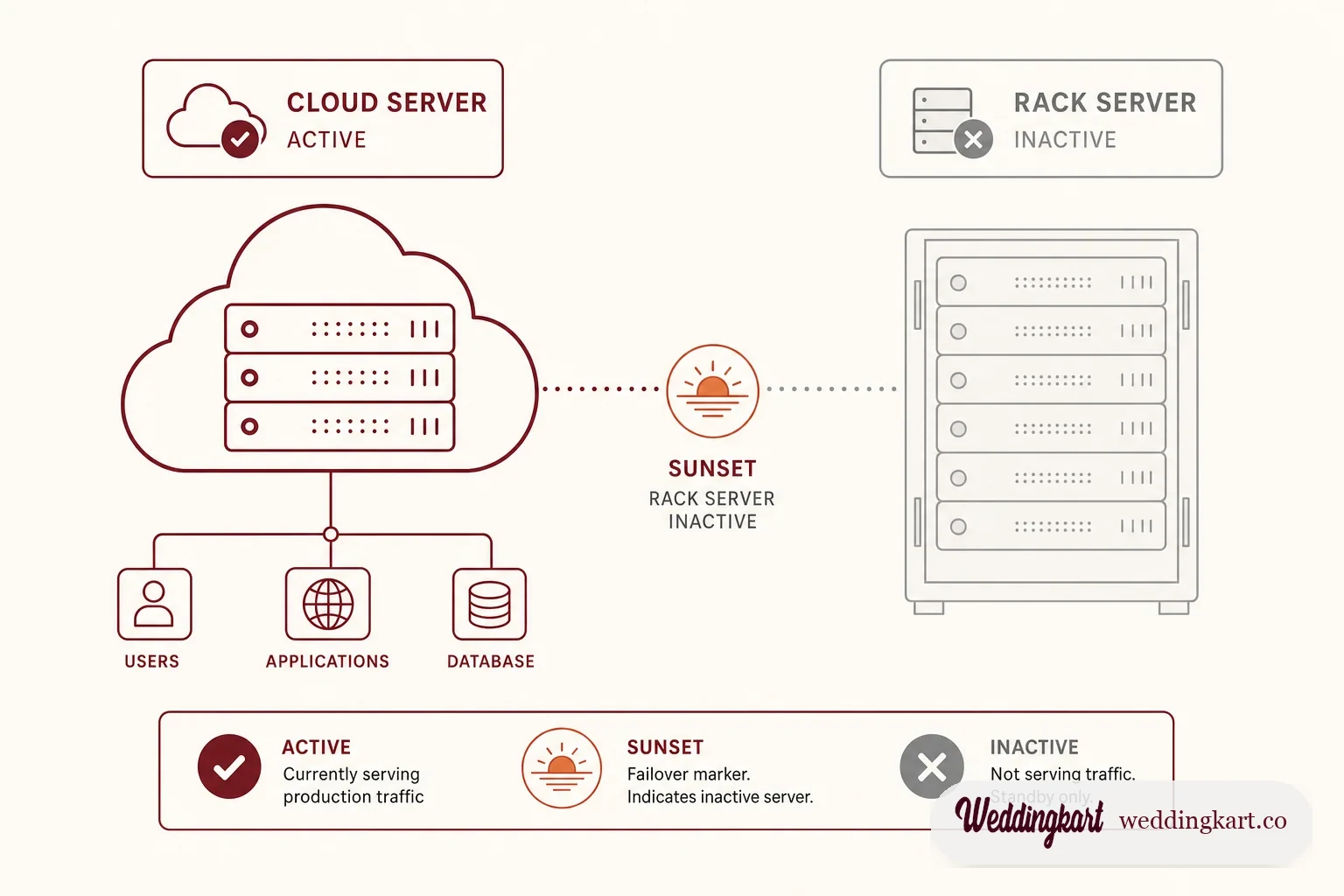
Search for “WhatsApp Cloud API vs On-Premises” and you will find dozens of careful comparison tables weighing latency against control, hosting costs against compliance. Nearly all of them are answering a question that stopped existing on 23 October 2025.
That is the date the last supported On-Premises client expired. Not deprecated, not discouraged - it can no longer send or receive WhatsApp messages. If you are choosing today, you are not choosing.
How it actually ended
The wind-down ran for two years and was well signposted, which is worth knowing because it explains why so much stale content survives - the deprecation was announced long before it bit.
- October 2023 - Meta formally deprecates the On-Premises API.
- January 2024 - from version 2.53 onward, all new features ship to Cloud API only. On-Premises continues to get quarterly releases containing bug fixes and security patches, nothing more.
- 1 July 2024 - no new sign-ups accepted.
- 23 October 2025 - final supported version expires. Messaging stops.
The eighteen-month stretch where On-Premises still worked but received no new features is the part that hurt teams quietly. Anyone who built on it during that window shipped against a platform that was silently falling behind.
What Cloud API changed
With On-Premises, you ran the software. Docker containers, a database, a load balancer, upgrades on Meta’s cadence, and someone on call when the container fell over at a bad hour. The per-message rates were identical - you paid the infrastructure and the staffing on top.
Cloud API removes all of it. Meta hosts the endpoint, you make HTTPS calls, and there is no platform fee. You still pay per message delivered - see the pricing guide - but the operational tax is gone.
The more consequential difference is feature access. Everything Meta has shipped recently - Coexistence, Flows, the Calling API - is Cloud-only and always was. On-Premises did not lose a feature race; it was withdrawn from it.
About the data residency argument
The strongest case for self-hosting was always regulatory: keep the messaging infrastructure inside our own environment, inside our own jurisdiction. It deserves an honest post-mortem, because the argument was weaker than it looked.
On-Premises put the client software in your environment. It did not put the conversation there. Messages still traversed Meta’s network to reach a recipient’s phone, because that is what WhatsApp is. What you controlled was where a container ran and where message records were first written - meaningful for some audit requirements, but never the end-to-end sovereignty it was often sold as.
Today the controls that actually matter are downstream and are entirely yours: what you copy into your own database, where that database lives, how long you retain it, and who can query it. Those were always the substantive questions. Losing On-Premises removed an option; it removed much less actual protection than the comparison tables implied.
The choice that does still exist
Direct Cloud API, or through a Business Solution Provider. This one is live, and it is genuinely about tradeoffs.
| Direct Cloud API | Through a provider | |
|---|---|---|
| Cost per message | Meta’s rate | Meta’s rate plus markup or a platform fee |
| What you build | Sending, webhooks, retries, template management, inbox | Mostly configuration |
| Time to first message | Days, with a developer | Hours |
| Who owns the number | You | You, but administered through them |
| When something breaks | You debug it | You escalate - and wait |
| New Meta features | Available immediately | When the provider ships support |
Our view, having gone the direct route: the build is not the hard part. Sending a template message is an afternoon. What takes real time is everything around it - retry logic, webhook idempotency, template lifecycle management, and surfacing failures to people who do not read logs. Those are weeks, and they are the same weeks whether you are a startup or an enterprise.
The honest heuristic: go direct if WhatsApp messaging is part of your product, where you need control over sending behaviour and cannot wait on someone else’s roadmap for a Meta feature. Use a provider if WhatsApp is a channel your business uses but not a thing your business builds. Paying a markup to never think about webhook retries is a perfectly good trade.
If you are still reading a 2024 comparison
Three quick corrections to the things those articles say that are no longer true. On-Premises is not “better for high volume” - Cloud API handles far higher throughput than most businesses will ever generate, and On-Premises does not handle any. Cloud API is not “newer and less proven” - it is the only implementation and has been the default for years. And self-hosting is not a compliance shortcut, for the reasons above.
The genuinely useful frame in 2026 is not where the software runs. It is understanding the platform’s rules - templates, windows, quality ratings, per-message billing - because those apply identically no matter who is calling the API on your behalf. That is what the platform overview is for.
Tools referenced in this post
Try Weddingkart for your wedding
Guest lists, WhatsApp invites, RSVPs, countdowns and more - the AI layer for Indian weddings.
Related reading
Frequently Asked Questions
Is the WhatsApp On-Premises API still available?
No. Meta deprecated it in October 2023, blocked new sign-ups after 1 July 2024, and the final supported client version expired on 23 October 2025. Since that date the On-Premises API cannot be used to send or receive WhatsApp messages. Any guide presenting it as a current option is out of date.
What is the difference between Cloud API and the WhatsApp Business API?
They are not alternatives - the naming is just confusing. "WhatsApp Business API" is the old name for the platform as a whole, now formally the WhatsApp Business Platform. Cloud API is the specific implementation of it that Meta hosts. When someone says they are "on the Business API" today, they are on Cloud API, because it is the only implementation left.
Does Cloud API cost more than On-Premises did?
It costs less. Meta charges nothing for Cloud API access or hosting - you pay only per message delivered. On-Premises required you to run and scale Docker containers, a database and a load balancer, which carried real infrastructure and staffing costs on top of identical per-message rates. Removing that overhead was much of the point.
Can I self-host WhatsApp messaging for data residency reasons?
Not anymore, and the residency argument was weaker than it appeared even when you could. On-Premises hosted the client software in your environment, but messages still travelled through Meta’s network to reach recipients - you controlled where the container ran, not where the conversation went. If data residency is a hard requirement, the meaningful controls today are what you store in your own systems and how long you keep it.
Do I need a Business Solution Provider to use Cloud API?
No. You can register a Meta app, get an access token and call Cloud API directly, and many companies do. A provider is worth paying for when you want a ready-made team inbox, campaign tooling, and someone accountable when a number gets flagged. You are buying operations and support, not access.
Was this article helpful?
Share
By Weddingkart TeamLast updated